

Can AI replace a therapist? At Summit Achievement, we explain why the human element is irreplaceable in residential treatment and adventure therapy for teens. Learn how we balance modern technology with authentic, human-to-human healing.
At Summit Achievement, we lean into a model of care that blends individualized personalized clinical support, accredited academics, and adventure therapy. We’re not anti-technology—we use it to help our students succeed in the modern world. But as Artificial Intelligence (AI) begins to permeate the mental health space, we have to draw a line.
An algorithm can simulate a conversation, but it cannot witness a life. Here is why the “human-to-human” connection remains the gold standard for adolescent healing.
The Limits of AI in Adolescent Mental Health Treatment
So let’s try to understand a little more about why these limits exist. The algorithms are built on patterns and “if/then” logic. Sounds great in theory, right? However, human struggle, especially in the teenage years, is rarely that linear.
- The Missing “Vibe Check”: Why Non-Verbal Cues Matter in Therapy: So much of therapy is non-verbal. A seasoned therapist, like our team at Summit Achievement, notices the slight catch in a student’s breath, the way they avert their eyes when a specific topic comes up, or the slumped shoulders after a tough day in the classroom. AI only “knows” what is typed or spoken; it misses the soul of the message.
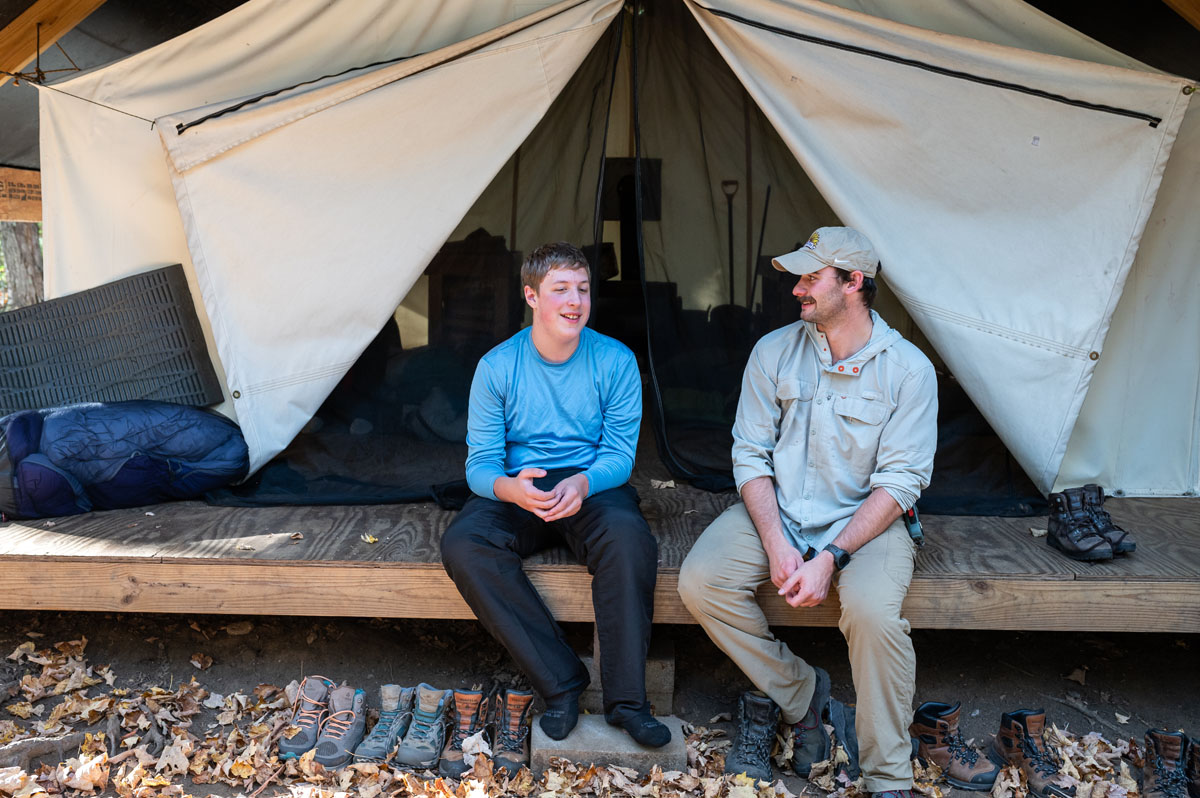
- Shared Vulnerability: The Heart of Adventure Therapy: In adventure therapy, the breakthrough often happens because the field staff is right there in the mud, the rain, or the wind with the student. AI doesn’t feel cold. It doesn’t feel tired. Without that shared physical reality, the “empathy” an AI offers is just a script.
- Decoding the Nuance of Teenage Tone and Sarcasm: A bot might identify a “sad” word, but it can’t distinguish between teenage sarcasm, genuine despair, or the quiet “I’m okay” that actually means “I need help.”
Why Human Connection is Essential for Long-Term Adolescent Healing
At Summit Achievement we see daily proof that healing is a social process. You cannot automate the “Aha!” moment that happens in a group setting like a shared meal or a difficult team hike.
- The Power of Authentic Presence and Accountability in Mentorship: There is a profound neurological shift that happens when a young person feels truly seen by a mentor. That “felt safety” is what allows a student to lower their defenses and engage in the accredited academic setting or the clinical work. A bot can’t provide that authenticity.
- Accountability with Heart, a Human Beating Heart: An app can send a push notification to “practice mindfulness,” which is easily swiped away. A human peer or field staff offers a hand and says, “I know this is hard, but we’re doing this together.” That is where resilience is born.
- Moral and Ethical Complexity: Adolescence is messy. Figuring out who you are is messy. It requires a guide who has navigated their own life, made mistakes, and found a way through. AI doesn’t have a life story; it has a database.
- Ethical practice: New studies, such as this one, led by Brown University, discuss how AI chatbots violate several ethical guidelines for clinical practice and can actually be harmful to clients.
High-Tech Tools vs. High-Touch Healing at Summit Achievement
We believe technology should be a tool in the backpack so to speak, not what delivers individualized therapeutic support. At Summit Achievement, we might use digital tools to track progress or enhance learning in our accredited academic classrooms, but the heart of our work stays human.
The goal isn’t to replace the therapist with an algorithm; it’s to use every resource to get the student back to a place where they can navigate the real, physical, human world with confidence.
At the end of the day, a screen can give you information, but only a human can give you hope. At Summit Achievement we put people first, walking alongside students and families from day one. Try doing that with an AI bot.