



If you are raising a child with ADHD, ASD Level 1 or both, you have likely lived this scenario:
The homework sits untouched. The room remains a disaster. You have asked them five times to put their shoes on, yet they are staring into space, fully dressed except for their feet.
It is easy to label this behavior as lazy, defiant, or unmotivated. But neurobiology tells a completely different story.
Your child isn’t refusing to work—their brain is experiencing a physiological bottleneck.
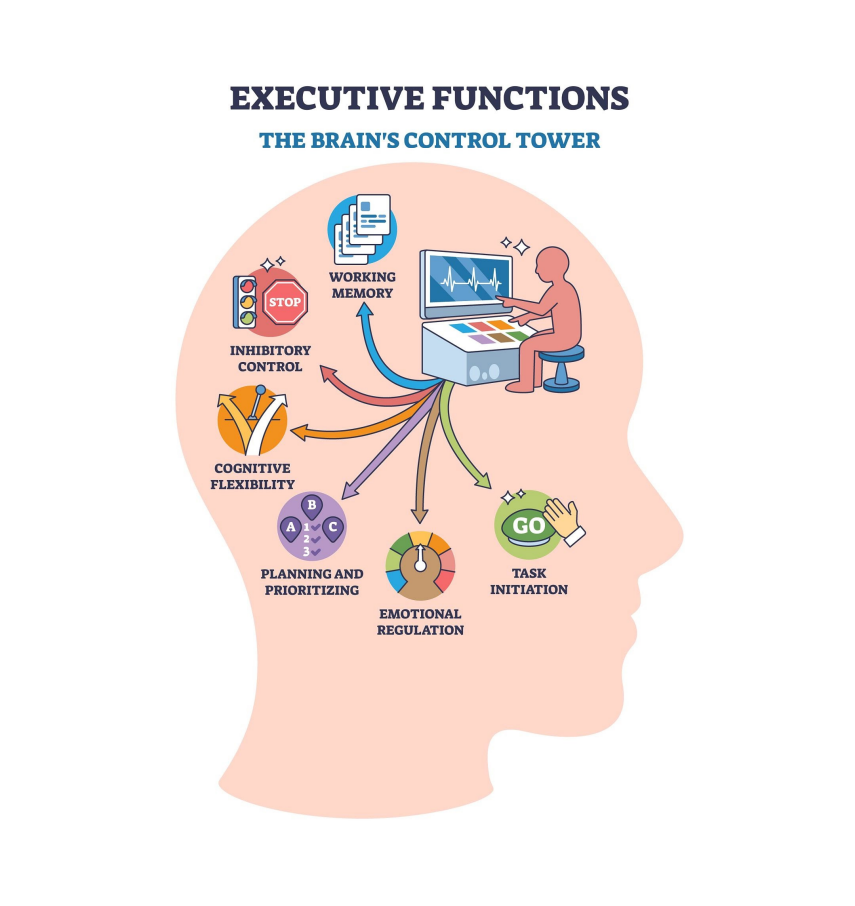
The Neurobiology: Why It Looks Like Laziness, But Isn’t
Laziness is a choice—a conscious decision to withhold effort despite having the capacity to act. Executive Dysfunction is a neurological barrier where the brain’s command center fails to execute an intention (Barkley, 1997).
In a neurodivergent brain with ADHD and ASD 1, the path from motivation to movement is physically disrupted by underlying chemistry. While the initial intention—the clear desire or need to complete a task—is fully present, it hits a roadblock in the prefrontal cortex due to a deficit in dopamine and key neurotransmitters. This neurological barrier cuts off the connection between wanting to act and physically starting, resulting in a state of task paralysis where the intention fails to translate into action (Volkow et al., 2009).
When a child with ADHD or ASD1 – or both! – sits frozen, their internal system is running on high anxiety while their motor output remains locked.
1. The Dopamine Deficit (ADHD)
The prefrontal cortex relies on dopamine to regulate attention, anticipate rewards, and initiate action. In ADHD brains, dopamine pathways function differently:
- Neurotypical Brain: Performs a low-interest task (like math homework) by anticipating the future reward of finishing.
- ADHD Brain: Low-interest tasks feel like trying to start a car without fuel. The brain cannot generate the baseline dopamine required to initiate movement (Volkow et al., 2009).
2. Autistic Inertia & Cognitive Load (ASD Level1)
For children on the autism spectrum, getting stuck is often caused by Autistic Inertia—a distinct neurological difficulty starting, stopping, or shifting cognitive gears (Buckle et al., 2021). When ASD Level 1 and ADHD co-occur (AuDHD), these overlapping impairments create compound challenges for daily self-regulation (Leitner, 2014):
- Shifting from a high-interest task (like building a Lego set) to a low-interest task (like taking a shower) requires massive neural energy.
- Sensory Overload: If a child’s environment is visually cluttered or noisy, their brain works overtime just to filter background stimuli, leaving little cognitive room to follow multi-step directions.
Executive Dysfunction vs. Laziness
| Characteristic | True Laziness | Executive Dysfunction (ADHD / ASD1) |
| Internal State | Calm, unbothered, relaxed | Anxious, overwhelmed, self-critical |
| Desire to Act | Low to zero | High (wants to do it, but is mentally “frozen”) |
| Root Cause | Lack of motivation | Neurochemical deficit & processing overload |
| Response to Pressure | Might comply to avoid penalty | Triggers shutdown, meltdown, or task paralysis |
3 Science-Backed Strategies to Support Your Child
Punishing or shaming a child with executive dysfunction increases cortisol (the stress hormone). High levels of cortisol rapidly impair prefrontal cortex function, worsening task paralysis rather than solving it (Arnsten, 2009). Instead, bridge the cognitive gap with structure.
1. Reduce the Activation Energy
A task like “clean your room” requires dozens of discrete executive steps (prioritizing, sorting, storing).
- The Fix: Shrink the entry point. Ask your child to pick up only three blue things off the floor. Micro-steps release small bursts of dopamine that build momentum.
2. Externalize Executive Function
Neurodivergent brains struggle with working memory and time blindness.
- The Fix: Don’t rely on verbal multi-step instructions. Use visual schedules, checklists, or sand timers to make time and expectations concrete.
3. Co-Regulation Over Command
When a child is stuck in task paralysis, shouting from another room will not unfreeze them.
- The Fix: Practice “body doubling.” Sit quietly in the room near your child while they start their task. Your calm physical presence lowers their stress response and provides external structure.
Changing how you view your child’s struggles alters how they view themselves. When we swap the word “lazy” for “overwhelmed,” we move from frustration to effective support.
References & Scientific Backup
- Arnsten, A. F. (2009). Stress signalling pathways impair prefrontal cortex structure and function. Nature Reviews Neuroscience, 10(6), 410–422.
- Barkley, R. A. (1997). Behavioral inhibition, sustained attention, and executive functions: Constructing a unifying theory of ADHD. Psychological Bulletin, 121(1), 65–94.
- Buckle, K. L., Leadbitter, K., Poliakoff, E., & Gowen, E. (2021). “No way out except from behind”: Description and implications of Autistic Inertia. Frontiers in Psychology, 12, 631596.
- Leitner, Y. (2014). The co-occurrence of autism spectrum disorder and attention deficit hyperactivity disorder in children. Frontiers in Human Neuroscience, 8, 268.
- Volkow, N. D., et al. (2009). Evaluating dopamine reward pathway in ADHD: Clinical implications. JAMA, 302(10), 1084–1091.
If your teenager is struggling with their mental health or difficulty within the family system, and you are considering treatment options, Summit Achievement could be right for your family. Reach out to Admissions today.