

Outcome Data
Measured Growth, Lasting Change
We believe families deserve transparency about what works. That’s why we’ve tracked student outcomes for over a decade using standardized tools and follow-up data. The results consistently show that students who participate in Summit’s integrated model make significant, lasting improvements.

Our Commitment to Evidence-Based Results
At Summit, students make significant improvements in mental health, academic functioning, and overall well-being, and those gains hold six months and one year after they leave.
This data isn’t just numbers. It represents hundreds of students who arrived struggling and left with the skills, confidence, and resilience to move forward. It reflects families who rebuilt trust and connection. And it demonstrates that Summit’s approach — blending personalized clinical support, accredited academics, and adventure therapy — creates real, measurable change.
Our Data Shows:
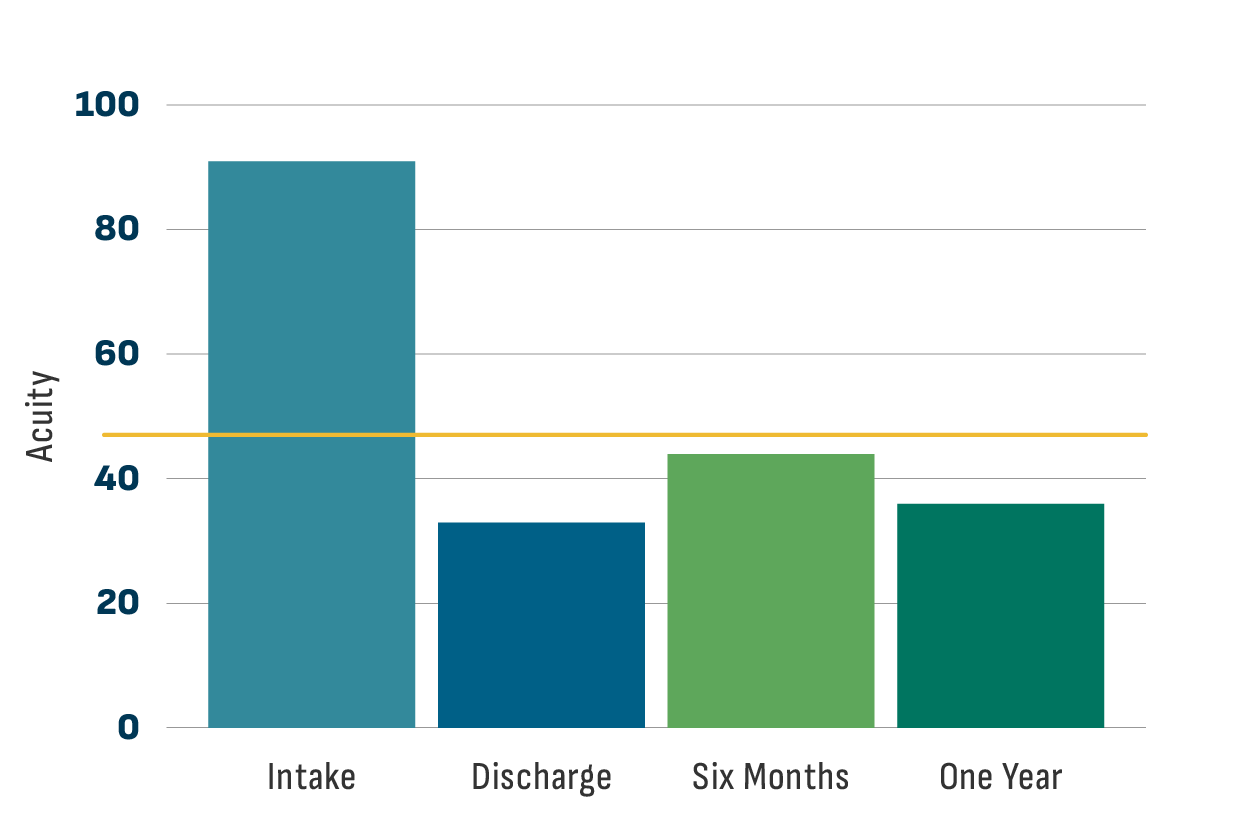
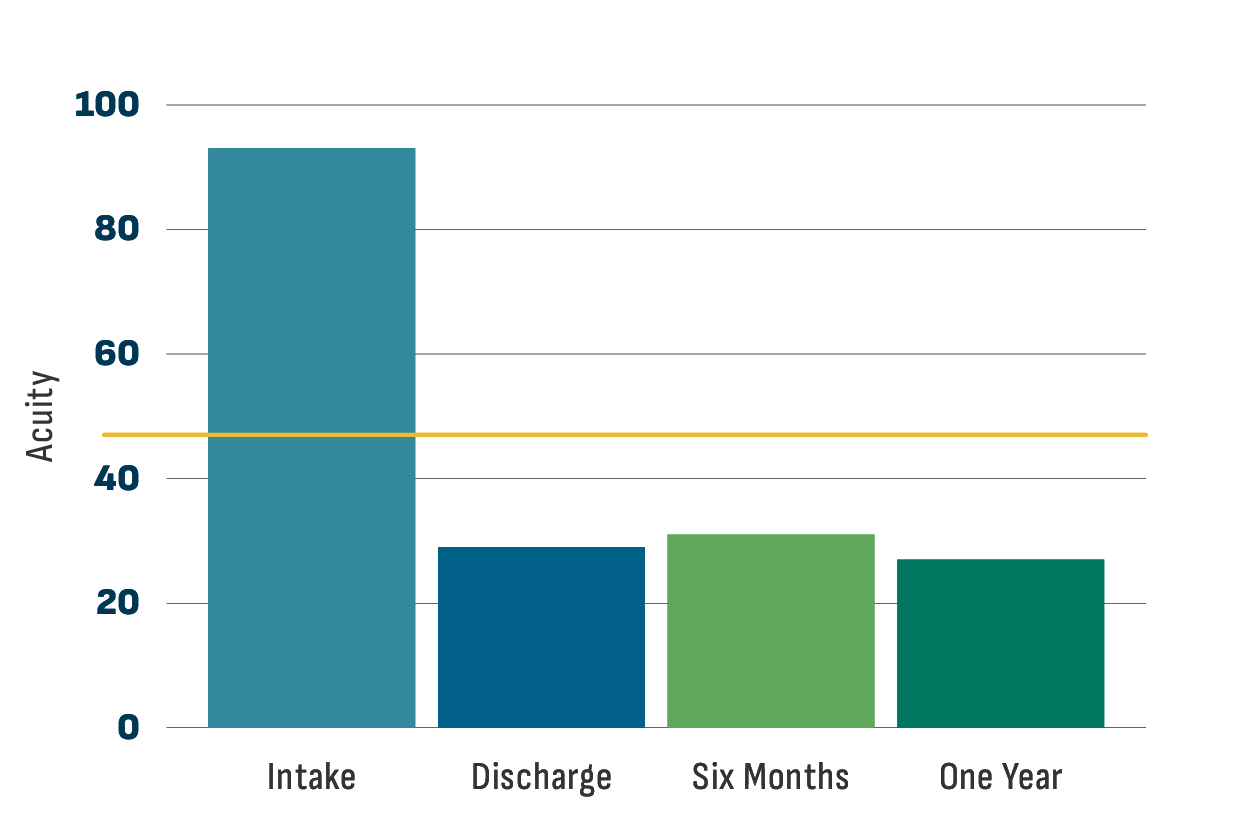
Summit students drop between 58 (Venture alone) and 64 (Venture and Traverse) during their stay and maintain significant change six months and one year after discharge.
Overwhelmingly, clients who participate in our full-continuum (Venture and Traverse) make significant growth in managing their mental health.
Clients who do the full-continuum perform better at discharge, 6 months post-discharge, and 1 year post-discharge compared to clients who just do Venture.
OUTCOME DATA DATA PHASE 1
(Venture Only)
OUTCOME DATA FULL-CONTINUUM
(Venture + Traverse)
Students self-report a decrease in depressive and anxious symptoms:
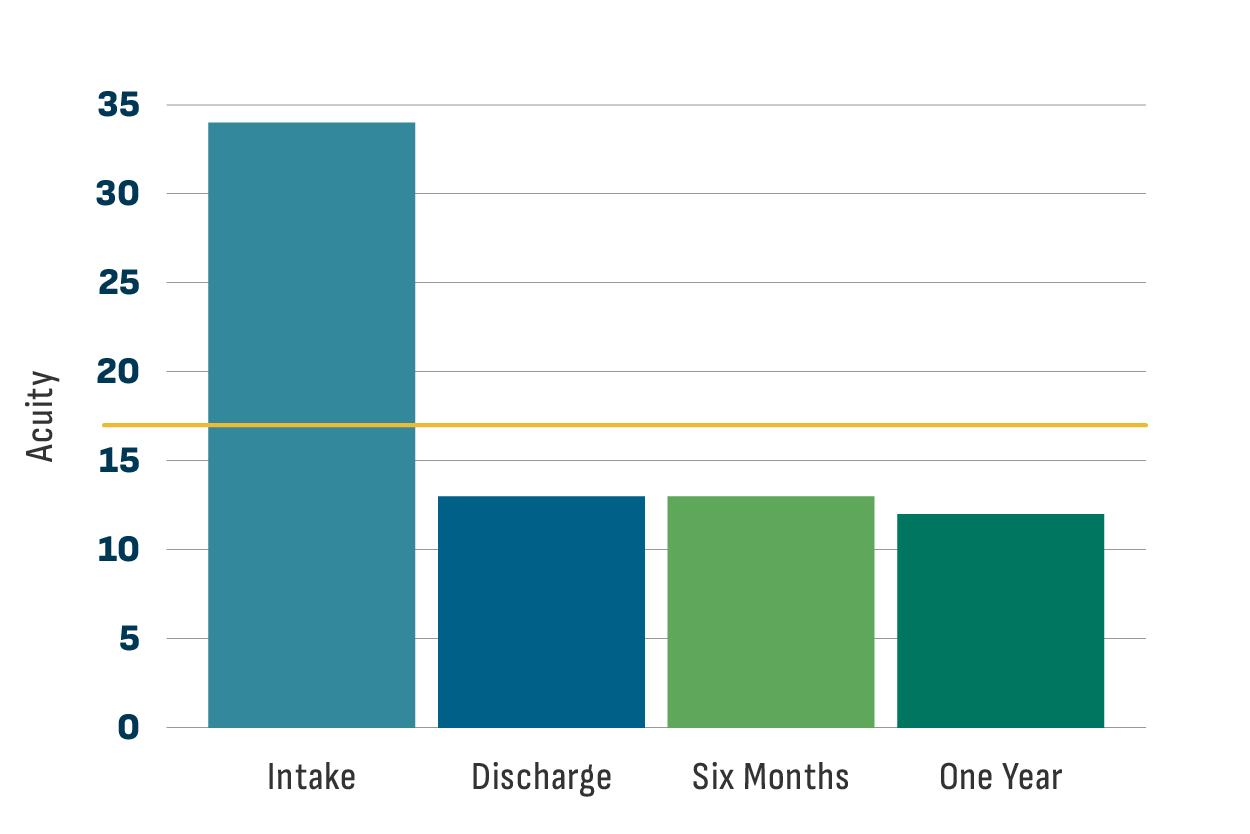
The YOQ sub-category for Mental Health Distress measures depression, anxiety, and fearfulness. According to data collected over the past ten years (where lower scores indicate fewer depressive symptoms), students report an average score of 35 at intake, 13 at discharge, 13 at 6 months post-discharge, and 12 at one-year post-discharge. The yellow line indicates a healthy level at 17. The graphs below represent outcomes for clients who do the full-continuum (Venture and Traverse) and those who do just Venture.
YOQ PHASE 1
(Venture Only)
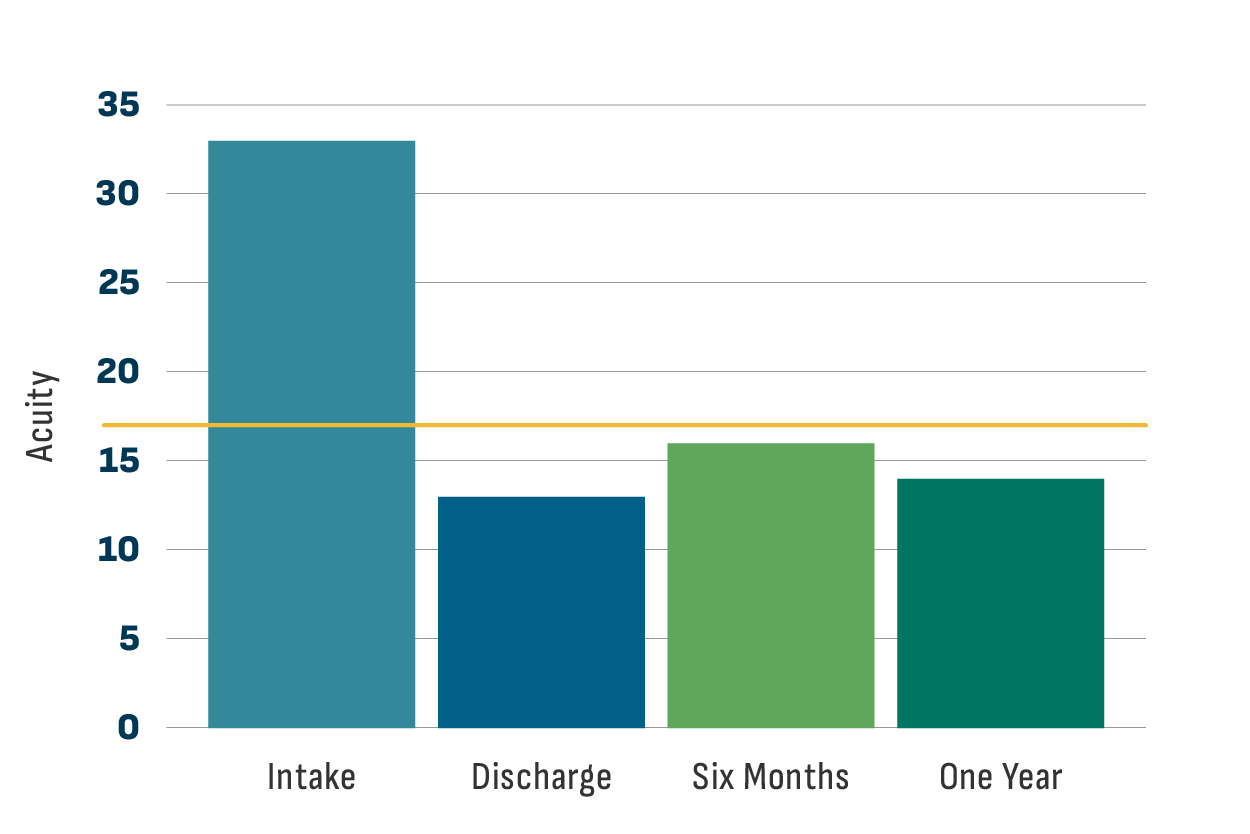
YOQ FULL-CONTINUUM
(Venture + Traverse)
Post Summit Success:
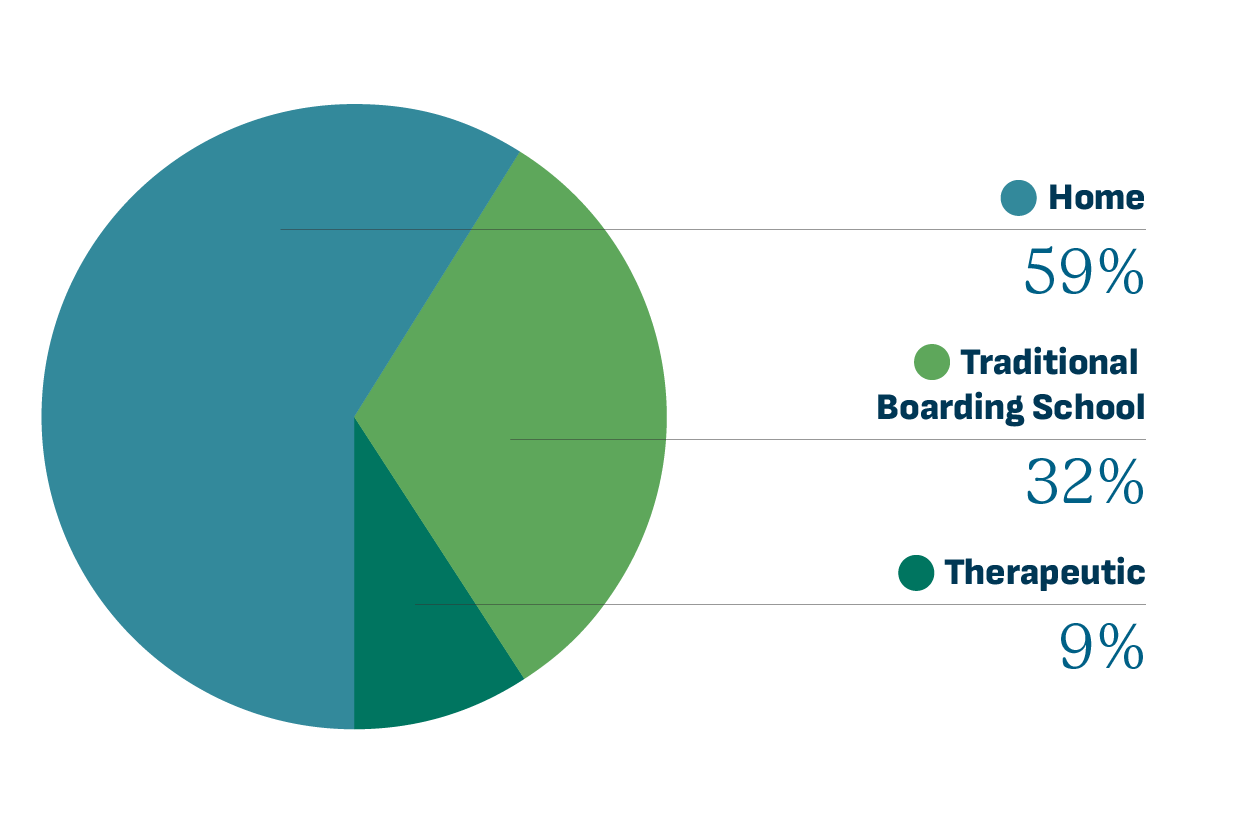
More than 90% of Summit students transition to a lower level of care after completing treatment. This demonstrates that Summit effectively prepares students and families for the next chapter, whether that’s returning home with outpatient support, attending a therapeutic boarding school, or stepping back into their home community with the tools to thrive.
Frequently Asked Questions:
What do these graphs represent?
These graphs represent ten (10) years of data collected from students and parents to assess overall mental health upon enrollment (Intake), upon leaving the program (Discharge), six months (6 mos.) post-discharge, and one year (1 yr) post-discharge.
What is the yellow line?
- The yellow horizontal line in each graph distinguishes a clinical “healthy” level of functioning
- Below the yellow line: Healthy level of functioning
- Above the yellow line: Unhealthy level of functioning
- Note: 13 points represents a clinically significant change
How is the data derived?
- This data is derived from completing the Youth Outcome Questionnaire, a 64-question tool given to parents/caregivers and students.
- Only clients that had complete data sets at intake, discharge, 6 months, and/or 1 year were included.
- Several hundred complete data sets were used to calculate both Venture and full-continuum results (Venture and Traverse).