

When Your Adolescent Is Struggling, You Don’t Have to Navigate It Alone.
If therapy, medications, school changes, or endless conversations haven’t helped your child find their footing, there is still hope. Summit Achievement helps adolescents rediscover confidence, resilience, and purpose through a deeply supportive therapeutic and academic environment.
As a parent or guardian, you’ve likely watched anxiety, depression, school refusal, emotional shutdown, social isolation, or unhealthy behaviors slowly take over family life. You’ve researched therapists late at night, sat through difficult appointments, worried constantly, and wondered if you’re making the right decisions.
You are not failing your child.
Sometimes adolescents need more than weekly therapy sessions or another medication adjustment. They need a complete reset — a safe environment away from daily pressures where they can rebuild confidence, reconnect with themselves, and develop the skills needed to move forward.
At Summit Achievement, students experience a structured therapeutic boarding school environment that combines clinical support, accredited academics, adventure therapy, and a close-knit community designed to help young people grow emotionally, socially, and academically.
For many families, Summit becomes the turning point.
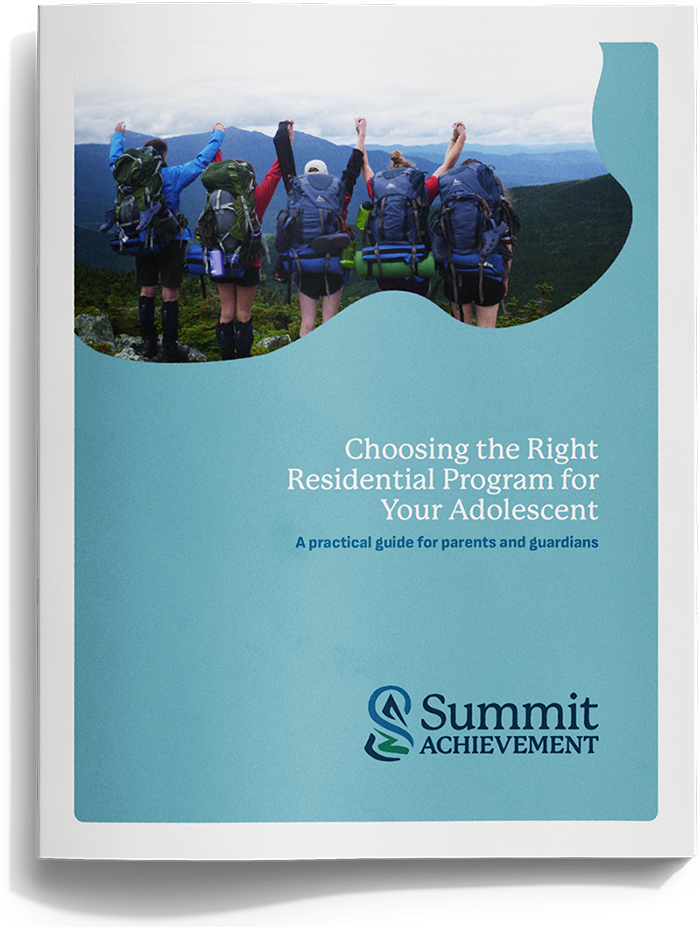
Our Free Parent Guide
Download Summit Achievement’s guide for practical, compassionate guidance as you explore treatment options for your adolescent.
Learn More About:
- How to assess whether residential treatment may be the right next step
- What to look for in a safe, reputable, family-centered program
- How to talk with your teen about treatment in a supportive way
- The difference between wilderness therapy and Summit’s adventure therapy model
Enter your email to receive immediate access.
Common Challenges We Address
Students at Summit are often working through one or more of the following:
Emotional + Mental Health
- Anxiety and depression
- Low self-esteem and lack of motivation
- Difficulty processing grief or loss
- ADHD and executive functioning challenges
Academic
- Profound academic challenges
- Learning differences, including Autism Spectrum Disorder Level 1 and non-verbal learning disorders
- Avoidance of responsibility
Identity and Gender
- Questions about gender identity or sexual orientation
- Navigating life as a transgender, gender non-conforming, or gender fluid adolescent
- Family dynamics around identity and acceptance
- Building confidence in one’s authentic self
Social + Behavioral
- Poor decision-making and impulsivity
- Defiance toward authority
- Difficulty with social skills and peer relationships
- Susceptibility to negative peer pressure
- School refusal or truancy
Family + Personal
- Adoption-related struggles
- Substance experimentation or misuse
- Technology and social media overuse
- Refusing or avoiding accountability for behavior
- Family conflict
What Makes Summit Different
At Summit Achievement, growth happens through relationships, responsibility, challenge, and connection.
Students participate in:
- Individual and family therapy
- Small, supportive academic classes
- Outdoor experiential education and adventure-based learning
- Community living that builds accountability and confidence
- Personalized treatment and academic planning
Rather than focusing only on symptoms, Summit helps students develop the emotional tools, self-awareness, resilience, and independence they need for long-term success.
Our approach is intentionally individualized because every student — and every family — is different.
What Summit Families Say
Your Family Doesn’t Have to Keep Carrying This Alone.
There are options. There is support. And there are paths forward that can help your adolescent — and your family — heal and move toward a healthier future.
Take the first step by speaking with our admissions director today.